HELLP syndrome is one of the symptoms of severe pre-eclampsia and includes
the following:
- Ahemolysis, decreased levels of hepatic enzymes, low platelet concentration.
- Bhemolysis, decreased levels of hepatic enzymes, high platelet concentration.
- Chemolysis, elevated levels of hepatic enzymes, low platelet concentration.
- Dhemolysis, elevated levels of hepatic enzymes, high platelet concentration.
- Enone of the above.
Reveal the correct answerArterial hypertension during pregnancy is not a homogeneous disease entity, but
consists of:
1) chronic hypertension – occurring before;
2) pregnancy-induced hypertension;
3) hypertension occurring before with superimposed pregnancy-induced
hypertension with proteinuria;
4) unclassified hypertension in pregnancy.
The correct answer is:
- Aonly 2.
- B1,2.
- C1,2,3.
- Dall the above.
- Enone of the above.
Reveal the correct answerPregnancy-induced hypertension:
- Adevelops after 20th week of pregnancy.
- Bin most cases resolves within 42 days after the delivery.
- Ccomplicates approx. 6-7% of pregnancies.
- Dis characterized by reduced tissue perfusion.
- Eall the above.
Reveal the correct answerDuring pregnancy cardiovascular system undergoes changes to cover increased metabolic needs of mother and a fetus. These changes include:
- Aincreased blood volume; increased cardiac output; increased peripheral resistance and decreased blood pressure.
- Bincreased blood volume; increased cardiac output; decreased peripheral resistance and decreased blood pressure.
- Cdecreased blood volume; increased cardiac output; decreased peripheral resistance and decreased blood pressure.
- Ddecreased blood volume; decreased cardiac output; decreased peripheral resistance and decreased blood pressure.
- Eincreased blood volume; no changes in cardiac output; increased peripheral resistance and decreased blood pressure.
Reveal the correct answerHypertension was diagnosed with repeated blood pressure measurements in a
60-year-old woman with obesity. She smokes cigarettes. She has not been treated
with any antihypertensive drugs so far. The blood pressure was 190/120 mmHg. The
following treatment should be recommended:
- Asalt intake should be reduced before starting antihypertensive treatment with drugs.
- Bincreased physical activity before starting antihypertensive treatment with drugs.
- Csmoking cessation before starting antihypertensive treatment with drugs.
- Dweight reduction before starting antihypertensive drug therapy.
- Eantihypertensive drug therapy should be started without delay.
Reveal the correct answerThe risk for contrast-induced nephropathy could be reduced by:
- Afurosemide.
- Bthiazide diuretics.
- Cpotassium-sparing diuretics.
- Dreduction of fluid intake before and after contrast infusion.
- Enone of the above.
Reveal the correct answerA 70-year-old man reports excessive urination at night - at least 3 times per
night. The symptoms have been noted for several months. They can be caused by:
- Aheart failure.
- Bchronic kidney disease.
- Cprostatic hypertrophy.
- Ddiabetes.
- Eall of the above.
Reveal the correct answerThe symptom which differentiates the diagnosis of severe pseudomembranous
colitis and ulcerative colitis is:
- Aparalytic ileus.
- Bfulminant colitis and toxic megacolon.
- Cperforation of the colon.
- Doedema.
- Esevere microcytic anemia.
Reveal the correct answerThe indications for introducing pancreatic enzyme substitution therapy in chronic
pancreatitis are:
1) high levels of serum amylase;
2) severe pain;
3) low levels of serum lipase;
4) progressive loss of body weight;
5) fatty diarrhea.
The correct answer is:
- A1,3.
- B2,3.
- C2,4,5.
- Donly 1.
- Eonly 3.
Reveal the correct answerWhich of these sentences are false with regard to esophageal cancer?
1) cancer markers do not play an important role in diagnosis of esophageal
cancer;
2) radiotherapy and chemotherapy are the main therapeutic methods in
adenocarcinoma of the esophagus;
3) incidence rate of the squamous-cell esophageal cancer is positively
associated with gastroesophageal reflux disease (GERD);
4) incidence rate of esophageal adenocarcinoma increases continuously;
5) cellular type and clinical stage of the disease determine the treatment of
esophageal cancer.
The correct answer is:
- A1,3.
- B2,4.
- C2,5.
- D2,3.
- E4,5.
Reveal the correct answerWhich of these sentences are true with regard to diffused esophageal spasm
(DES)?
1) medical history and physical examination are sufficient methods to establish
diagnosis of DES;
2) the main tests that are used in diagnosis of DES are x-ray of the upper
gastrointestinal tract, esophageal manometry and gastrofiberoscopy;
3) DES is a condition in which uncoordinated contractions of the esophagus
can lead to the typical appearance of the esophagus as the corkscrew
esophagus on barium swallow x-ray test;
4) in some severe cases DES can lead to malnutrition;
5) after observing characteristic (typical) abnormalities in esophageal
manometry and x-ray tests, the doctor is not required to perform
gastrofiberoscopy.
The correct answer is:
- A1,2,3.
- B3,4,5.
- C1,3,5.
- D2,3,4.
- E1,4,5.
Reveal the correct answerWhich of the following statements concerning acute toxic megacolon are true?
1) the diagnosis is based on CT or MR enteroclysis
2) the diagnosis is based on clinical evaluation and abdominal X-ray
3) the treatment is based on parenteral nutrition
4) intravenous wide spectrum antibiotics are used in the treatment
5) oral GCS are recommended for the treatment
The correct answer is:
- A1, 3, 4
- B1, 2, 5
- C2, 3, 5
- D2, 4, 5
- E2, 3, 4
Reveal the correct answerWhich of the following information about Crigler and Najjar syndrome type I is
false?
1) incidence of this syndrome is very low;
2) this syndrome is inherited as an autosomal dominant type;
3) serum bilirubin level is usually >17 mg/dl;
4) serum bilirubin level decreases after phenobarbital use;
5) liver transplantation is an effective method of treatment.
The correct answer is:
- A1, 2, 5
- B2, 3
- C2, 4
- D2, 5
- Eall the above
Reveal the correct answerThe confirmed predisposing factors for hepatic cirrhosis include:
1) alcohol;
2) hepatitis B, C or D;
3) sarcoidosis;
4) autoimmune hepatitis;
5)syphilis.
The correct answer is:
- A1,2,3.
- B1,2,4.
- C1,2,4,5.
- D1,2,5.
- Eall the above.
Reveal the correct answerA 75-year-old man with sigmoid diverticulosis - complaining of abdominal pain
localized in the left lower abdominal quadrant and irregular bowel motions without the
presence of blood in stools, presented with fever and elevated white blood count.
Palpation of the left lower abdominal quadrant revealed abdominal mass, muscular
guarding and a positive Blumberg’s sign. What kind of first line treatment should be
considered in this patient:
1) surgical treatment;
2) elementary diet;
3) diet rich in soluble fiber;
4) fasting (bowel rest);
5) antibiotics for 7-10 days.
The correct answer is:
- A1,4,5.
- B4,5.
- C2,3.
- D1,2.
- E2,3,5.
Reveal the correct answerHeavy proteinuria is a typical feature of:
- Aacute interstitial nephritis following nonsteroidal anti-inflammatory agents(NSAIDs).
- Bacute glomerulonephritis.
- Cmembranous nephropathy.
- Dall the above.
- EB and C arecorrect.
Reveal the correct answerAlbuminuria:
- Aserves as a key factor for monitoring response to therapy in acute kidney injury.
- Bis a basic tool for monitoring treatment of acute pyelonephritis.
- Cserves as a key adjunctive tool for monitoring nephron injury.
- Dis a basic tool to define the stage of chronic kidney disease (CKD).
- Eis all the above.
Reveal the correct answerWhat is the most probable diagnosis in a 70-year-old man who 1 month after
aortography developed acute renal failure with painful blue toe of the right foot with
livedo reticularis above and retinal plaques?
- Aprerenal renal failure.
- Barterial atheroembolism.
- Cobstructive nephropathy.
- Dcontrast nephropathy.
- Eacute glomerulonephritis.
Reveal the correct answerIn urinary tract infection in a pregnant woman the drug of the first choice is:
- Aamoxycillin.
- Bgentamycine.
- Crifampin.
- Dciprofloxacine.
- Eimipenem-cilastatin.
Reveal the correct answerThe typical feature of nephritic syndrome is:
- Aactive urinary sediment.
- Barterial hypertension.
- Cproteinuria <3.5 g/dl.
- Dall the above.
- EA and C are correct.
Reveal the correct answerIndicate which state is not a cause of hypercalcemia:
- Aprimary hyperparathyroidism.
- Bsarcoidosis.
- Cvitamin D depletion.
- Dmultiple myeloma.
- Emetastatic bone disease.
Reveal the correct answerWhich of the following statements concerning the initiation of dialysis therapy
in chronic kidney disease is false:
- Acreatinine clearance must be >20 ml/min.
- Bno survival advantage was shown for early initiation of renal replacement therapy.
- Cclinical criteria for dialysis initiation are the most important.
- Dthere is considerable interindividual variability in the severity of uremic symptoms and renal function.
- Eserum creatinine concentration is not a good indicator for renal dysfunction.
Reveal the correct answerWhich of the following is not a feature of renal artery stenosis?
- Aunexplained hyperkalemia.
- Babrupt onset of hypertension.
- Caccelerated or malignant hypertension.
- Drefractory hypertension.
- Eunilateral small kidney.
Reveal the correct answerA clinical picture showing the inflammation of Achilles tendon is typical of:
- Arheumatoid arthritis.
- Bseronegative spondyloarthropathies.
- Csystemic lupus erythematosus.
- Dosteoarthritis.
- EMarfan’s syndrome.
Reveal the correct answerWhich of the following drug(s) is/are useful in the treatment of Raynaud
phenomenon?
- Aβ-blockers.
- BNSAIDs.
- Ccalcium channel blockers.
- Dcolchicine.
- Etramadol.
Reveal the correct answerA 32-year-old female reported to the hospital due to rapidly occurring
hemiplegia of the left side. An ischemic stroke was diagnosed. In the history:
thrombophlebitis of both legs one year ago, two miscarriages. In the laboratory testing:
platelet count 90 G/l, APTT time 65s. What kind of autoantibodies should be
determined in this clinical case?
- Aantiphospholipid antibodies.
- Brheumatoid factor.
- Canti-SS-A, anti-SS-B autoantibodies.
- Danti-CCP antibodies (anti-citrulline antibodies).
- Eantibodies against Borrelia burgdorferi.
Reveal the correct answerFirst line therapy in the treatment of osteoporosis includes the following
drug(s):
- Acalcitonine.
- Bbisphosphonates.
- Cestrogens.
- Dglucocorticosteroids.
- EB and C are correct.
Reveal the correct answerAntinuclear antibodies may be present in the serum of:
- Apatients with systemic lupus erythematosus.
- Bpatients with drug induced lupus.
- Cpatients with mixed connective tissue disease.
- Dhealthy elderly.
- Eall the above.
Reveal the correct answerA 55-year-old female is complaining about dry eyes, problems with swallowing
dry meals. In physical examination found: painless enlargement of cervical and axillary
lymph nodes, as well as parotid and submandibular glands on both sides. In
Schirmer’s test: 3 mm on both sides. In laboratory testing: ESR 105 mm/h, anti-SS-A,
anti-SS-B antibodies present. The presented case should be recognized as:
- Asystemic lupus erythematosus.
- Bmixed connective tissue disease.
- Cpolymyalgia rheumatica.
- Dsystemic sclerosis.
- ESjögren’s syndrome (sicca syndrome).
Reveal the correct answerWhich of the following joints may be involved in psoriatic arthritis?
1) proximal interphalangeal;
2) distal interphalangeal;
3) knee;
4) ankle;
5) sacroiliac.
The correct answer is:
- A1,3,4.
- B2,5.
- C1,2.
- Donly 5.
- Eall the above.
Reveal the correct answerWhich of the following clinical forms of the necrotizing vasculitis is
accompanied by bronchial asthma?
- AWegener’s granulomatosis.
- BChurg-Strauss syndrome.
- Cgiant cell arteritis.
- Dpolyarteritis nodosa.
- ETakayasu disease.
Reveal the correct answerWhich of the following autoantibodies are the most specific ones for
generalized systemic sclerosis (SSc)?
- Aanti-Scl 70.
- Banti-dsDNA.
- Crheumatoid factor (RF).
- Danti-CCP.
- Elupus anticoagulant (LA).
Reveal the correct answerThe following are all typical of Ankylosing spondylitis (AS) except for:
- Ainflammatory back pain.
- Bmale predominance.
- Crheumatoid factor presence.
- Denthesitis (Achilles tendon insertion inflammation).
- Eiridocyclitis (anterior uveitis).
Reveal the correct answerThe risk of thromboembolic complications is one of the most important things
to consider related to treatment of patients with atrial fibrillation. The most commonly
used scale which facilitates the selection of proper treatment strategy for an individual
patient is called:
- ACHA2DS2VASc
- BHAS-BLED.
- CSCORE.
- DCCS.
- ENYHA.
Reveal the correct answerThe prevention of sudden cardiac death in patients who survived cardiac arrest in
the mechanism of ventricular fibrillation unrelated to acute coronary syndrome requires:
- Aproper drug treatment only.
- Bcardiac pacemaker implantation.
- Cautomatic cardioverter-defibrillator implantation.
- Dcardiac ablation.
- Efirst cardiac pacemaker implantation and in the next stage cardiac ablation.
Reveal the correct answerIndicate correct statements concerning chylomicronemia syndrome:
1) increases the risk of atherosclerosis
2) does not increase the risk of atherosclerosis
3) clinically is manifested by paroxysmal abdominal pain
4) clinically is manifested by chronic headache
5) clinically is manifested by acute pancreatitis
6) clinically is manifested by xanthelasma
The correct answer is:
- A1, 3, 5
- B1, 4, 5
- C1, 3, 6
- D2, 3, 5
- E2, 4, 6
Reveal the correct answerCardiac syndrome X is a clinical condition characterized by the presence of:
- Achest pain, ST segment elevation in ECG exercise testing, coronary artery stenosis.
- Bdiabetes type 2, hypertension, lipiddisorder.
- Cobesity, diabetes type 2, coronary arterydisease.
- Ddiabetes type 2, obesity, hypertension.
- Echest pain, ST segment depression in ECG exercise testing, normal coronary arteries.
Reveal the correct answerIn order to decrease the risk of thromboembolism a patient with atrial fibrillation
lasting for more than 48 hours should be given oral anticoagulants:
- Aat least for 4 weeks before cardioversion.
- Bat least for 3 week before cardioversion and 4 weeks after cardioversion.
- Cat least for 4 weeks before cardioversion and then till the end of their life.
- Dat least for 3 weeks after cardioversion.
- Eoral anticoagulants in hemodynamically stable patients are not necessary.
Reveal the correct answerChronic cough, coughing up of excessive amount of purulent sputum in the
morning, rales in the lower parts of the lungs in a child of pre-school age are suggestive of:
- Abronchial asthma.
- Brelaxation of trachea.
- Cacute sinusitis.
- Dbronchiectasis.
- Echronic obstructive lung disease.
Reveal the correct answerConstipation may be caused by:
1) low intake of cellulose and fluids;
2) changes in lifestyle;
3) application of some drugs, e.g. alkalies, opiates;
4) anatomical anomalies of the rectum;
5) functional perianaldisorders.
The correct answer is:
- A1,2.
- B1,3
- C2,3,4.
- D1,2,3,4.
- Eall the above mentioned.
Reveal the correct answerHydrogen breathing test:
1) is used to diagnose disaccharide intolerance;
2) is used to diagnose Helicobacter pylori infection;
3) measures expiratory hydrogen concentration after disaccharide loading;
4) measures hydrogen concentration after oral urea intake;
5) is a functional test for FEV1 and VC estimation.
The correct answer is:
- Aonly 1.
- B1,3.
- Conly 2.
- D2,4.
- Eonly 5.
Reveal the correct answerThe symptom that speaks against severe dehydration is:
- Apositive skin fold sign.
- Bdryness of the mucosa.
- Coliguria.
- Dbradycardia.
- Edecreased blood pressure.
Reveal the correct answerA 10-year-old boy presents with skin changes in popliteal and elbow pits.
These are inflammatory infiltrations with significant lichenization, excoriation and small
skin erosions. He complains of excessive itching. From the past medical history you
learn that he is treated for bronchial asthma with montelucast. The most probable
cause of skin changes is:
- Amontelucast allergy.
- Bscabies.
- Ctinea cutis.
- Datopic dermatitis.
- Eichthyosis.
Reveal the correct answerWhich of the following genetic disorders does not give phenotypic changes
during infancy?
- ATurner syndrome.
- BKlinefelter syndrome.
- CEdward syndrome.
- DDown syndrome.
- EPrader-Willi syndrome.
Reveal the correct answerWhich of the following symptoms is not characteristic of iron deficiency
anaemia?
- AHb level below 9 g/dl (5.6 mmol/l).
- Bhematocrit below 0.30/l.
- Cserum Fe below 17 µmol/l.
- Dserum ferritin 20-25 ng/ml.
- Eslowdown in growth and weight gain.
Reveal the correct answerWhich of the following symptoms is not characteristic of irritable bowel
syndrome?
- Aalternating occurrence of loose stools up to 3 times a day and bated stools at least twice per week for at least 3 months during a year.
- Bcoexistence of abdominal pain with the symptoms mentioned above.
- Cabdominal distension and bowel urgency.
- Dlonger periods without discomfort.
- Ephysical developmental delay, mainly deficiency in body weight.
Reveal the correct answerWhich of the following plays the main role in the development/pathophysiology
of acute otitis media in infants?
- Aanatomical ear differences.
- Blocal isolated viral ear infection.
- Cviral infections of nasal cavity and nasopharynx.
- Dprimary bacterial middle ear infections.
- Ebacterial middle ear infections secondary to sinusitis.
Reveal the correct answerIn the treatment of asthma one should not:
- Aminimize chronic symptoms of the disease.
- Bprevent exacerbation.
- Creduce the use of short-acting β-adrenergics.
- Davoid tobacco smoke.
- Eminimize physical activity.
Reveal the correct answerSubsequent milk served to milk-mix-fed 6- to 12-month-old infant does not
have to contain/provide:
- Aincreased caloric content of meals per kg of body weight.
- Bdecreased amount of proteins.
- Cpredominance of casein proteins
- Dthe lowest salt and sugar amount.
- Eadequate calcium intake.
Reveal the correct answerWhich of the following is not an absolute contraindication to gastric lavage in
children?
- Ahaemorrhagic diathesis.
- Bingestion of caustic substances.
- Cpatient’s agitation and no cooperation.
- Dpast esophageal surgeries.
- Eesophageal varices.
Reveal the correct answerWhich of the following pathogens is the most common cause of community
acquired pneumonia in infants?
- Agroup B Streptococcus.
- BKlebsiella pneumoniae.
- CMycoplasma pneumoniae.
- DStaphylococcus aureus.
- EHaemophilus influenzae.
Reveal the correct answerA 6-year-old boy presented with fever, fatigue, sore throat and abdominal pain
lasting for a few days. Medical examination revealed high fever, pharyngeal
inflammation, enlarged submandibular and cervical lymph nodes, painfulness in
epigastric and umbilical region with splenomegaly and hepatomegaly. Blood cell count
showed lymphocytic leucocytosis with atypical lymphocytes. The most probable
diagnosis is:
- Aborreliosis.
- Btyphoid fever.
- Cscarlet fever.
- Dstreptococcal angina.
- Einfectious mononucleosis.
Reveal the correct answerWhich of the following drugs should be used in the treatment of a 10-year-old
boy with giardiasis?
- Aamoxicillin.
- Bmetronidazole.
- Cnifuroxazide.
- Damoxicillin with clavulanic acid.
- Eclarithromycin.
Reveal the correct answerWhich of the following is not an alarming symptom of primary immunological
deficiency?
- A2 month or longer unsuccessful antibiotic therapy.
- Brecurrent deep skin or organ abscesses.
- Cchronic oral mycosis.
- Drecurrent iron deficiency anemia.
- Echronic skin mycosis.
Reveal the correct answerA 12-year-old girl presented with lumbar region pain, nausea, loss of appetite
and fever (> 39°C). Laboratory examinations showed increased ESR, high C-reactive
protein concentration, leucocyturia and bacteriuria. The most probable diagnosis is:
- Aidiopathic nephrotic syndrome.
- Burinary calculus.
- Cglomerulonephritis.
- Drenal amyloidosis.
- Eacute pyelonephritis.
Reveal the correct answerA 5-month-old male infant was admitted to the hospital because of defecation
disorders (alternating constipation and diarrhoea) and loss of appetite. In medical
examination abdominal distension, and in per rectum study empty rectal ampulla were
noticed. The contrast enema showed a stricture in the distal part of the anus with a
widening above. In histopathological study - the lack of ganglion cells in the anus. The
diagnosis is:
- Airritable bowel syndrome.
- BHirschsprung’s disease.
- Cintestinal colic.
- Dobstruction.
- Efunctional constipation.
Reveal the correct answerWhich of the following are the criteria for the diagnosis of Alport syndrom?
1) fever;
2) family history of haematuria;
3) end-stage renal disease in at least one family member;
4) retinal flecks;
5) hearing loss.
The correct answer is:
- A1,2,3.
- B1,3,4.
- C1,2,5.
- D2,4,5.
- E3,4,5.
Reveal the correct answerWhich of the following are symptoms of congenital hypothyroidism?
1) large tongue;
2) diarrhoea;
3) poor muscle tone;
4) oedema of the face;
5) wet skin.
The correct answer is:
- A1,2,3.
- B1,3,4.
- C2,3,4.
- D3,4,5.
- E2,4,5.
Reveal the correct answerThe most common intraocular neoplasm in children is:
- Ahamartoma.
- Bglioma.
- Cretinoblastoma.
- Dmelanoma.
- Eastrocytoma.
Reveal the correct answerA 10-year-old girl presents with abdominal pain with no specific location
(mostly in umbilical region), sudden beginning, crampy character and short-lasting (up
to 60 minutes). Abdominal pain is increasing during rest and it’s decreasing during
exercise. The most probable diagnosis is:
- Aorganic abdominal pain.
- Bsomatic abdominal pain.
- Cpsychogenic abdominal pain.
- Dfunctional abdominal pain.
- Enone of the above.
Reveal the correct answerWhich of the following is not an alarming symptom of gastroesophageal reflux
disease in children?
- Adysphagia.
- Bweight loss.
- Cnocturnal abdominal pain.
- Danaemia.
- Enocturnal cough and dyspnea.
Reveal the correct answerWhich of the following drugs should not be applied in the treatment of a
2-year-old girl with a functional constipation?
- Aphosphatic enema.
- Bloperamide.
- Cparaffin.
- Dlactulose.
- Eglycerin suppository.
Reveal the correct answerA 11-year-old boy presents with a two-day history of intense pain in the
umbilical region, nausea and loss of appetite. Few hours before the examination he
vomited few times with a large amount of blood and noticed two tarry stools. The most
probable diagnosis is:
- AMeckel’s diverticulum.
- Besophageal varices.
- Cinfectious diarrhoea.
- Dpeptic ulcer.
- Einflammatory bowel disease.
Reveal the correct answerA 7-year-old girl, weight 20 kg, was admitted to the ER because of severe
diarrhea. Potassium level 2.5 mmol/l. The most appropriate procedure would be:
1) only oral supplementation of potassium containing fluids;
2) bolus of potassium solution iv;
3) intravenous supplementation of potassium solutions 20-40 mmol/L (1-2 ml
15% KCl/100 ml of solution);
4) potassium drip (15% KCl+5% sol. glucose) at a rate 10 mmol per hour,
under the control of monitor;
5) simultaneous correction of gasometric disorders and magnesium deficiency.
The correct answer is:
- Aonly 1.
- B3,4,5.
- Conly 2.
- D2,5.
- E1,5.
Reveal the correct answerA 7-year-old girl hospitalized because of urinary tract infection said that she
often slept with her uncle and that in the night her ‘tummy’, legs and bottom were being
touched. The doctor should:
1) note that in the child’s medical history;
2) refer the child to psychological tests;
3) talk to the girl’s mother;
4) immediately notify the prosecutor’s office or the police;
5) according to the Act on Physician and Dentist Professions keep this
information confidential because its disclosure could be harmful to the child.
The correct answer is:
- Aall the above.
- B1,2,3,4.
- C1,2.
- D1,2,3.
- E1,5.
Reveal the correct answerWhich of the following are indications for screening for celiac disease?
1) diabetes type II
2) lactose intolerance
3) Turner syndrome
4) tarry stools
5) recurrent oral aphthae
The correct answer is:
- A1, 2, 3
- B1, 3, 5
- C2, 3, 5
- D1, 2, 4
- E3, 4, 5
Reveal the correct answerWhich of the following is the best definition of the perineum?
- Aentire area between the thighs from the symphysis to the coccyx, bounded caudally by the skin and cephalically by the levator muscles of the pelvic diaphragm.
- Banus and perineal area.
- Csuperficial skin layer of the vulva.
- Dtendon joining the deep muscles to the external genitalia.
- Ecomplex of the bulbocavernosus, ischiocavernosus, and transverse perineal muscles.
Reveal the correct answerHow do Nabothian cysts arise?
- Athey are wolffian duct remnants.
- Bbecause of the blockage of crypts in the uterine cervix.
- Cbecause of squamous cell debris that causes cervical irritation.
- Dthey are carcinoma.
- Ethey are paramesonephric remnants.
Reveal the correct answerWhich of the following is the best description of the levator ani?
- Asuperficial muscular sling of the pelvis.
- Ba tripartite muscle of the pelvic floor penetrated by the urethra, vagina, and rectum.
- Cis made up of the bulbocavernosus, the ischiocavernosus, and the superficial transverse perineal muscle.
- Da muscle that abducts the thighs.
- Eis part of the deep transverse perineal muscle.
Reveal the correct answerDuring the menstrual cycle the histological appearance of the endometrium will
change significantly. During the first half of the menstrual cycle, the endometrium
becomes thicker and rebuilds largely in response to which of the following?
- Aprogesterone.
- Bfollicle-stimulating hormone (FSH).
- Cestradiol.
- Dluteinizing hormone (LH).
- Egonadotropin-releasing hormone (GnRH).
Reveal the correct answerGonadotropin-releasing hormone (GnRH) stimulates the release of which of
the following?
- Aadrenocorticotropic hormone (ACTH).
- Bgrowth hormone (GH).
- Cluteinizing hormone (LH).
- Dopiate peptides.
- Ethyroid-stimulating hormone (TSH).
Reveal the correct answerPut the three principal estrogens in women in decreasing order of potency?
- Aestradiol, estriol, estrone.
- Bestradiol, estrone, estriol.
- Cestriol, estradiol, estrone.
- Destriol, estrone, estradiol.
- Eestrone, estriol, estradiol.
Reveal the correct answerWhich of the following concerning cholestasis during pregnancy is false?
- Aincidence of the disease is approx. 0.5 – 1.5%.
- Bdisease occurs more often in twin pregnancy.
- Cit increases the risk of preterm delivery and fetal hypoxia.
- Dtermination of pregnancy before 36 week is recommended to avoid neonatal complications.
- Eursodeoxycholic acid is the first-line drug.
Reveal the correct answerMeasurement of chorionic gonadotropin is used:
1) for diagnosing early pregnancy;
2) as a marker of neoplasms of trophoblastic origin;
3) for diagnosing ectopic pregnancy;
4) for predicting spontaneous abortion;
5) for diagnosing multiple pregnancy.
The correct answer is:
- A1,2,3.
- B2,3,4,5.
- C3,4.
- D1,4.
- Eall the above.
Reveal the correct answerWhich of the following are the indication for hospitalization in pelvic
inflammatory disease (PID)?
1) tubo-ovarian abscess;
2) pregnancy;
3) Chlamydia trachomatis infection;
4) mediocre vaginal bleeding.
The correct answer is:
- Aall the above.
- B1,2,3.
- C1,2,4.
- D1,2.
- E2,4.
Reveal the correct answerWhich of the following statements concerning the mechanism of operation of
intrauterine device is false?
- Acopper ions increase the synthesis of endometrial prostaglandins leading to sluggish egg transport.
- Bbecause of the sluggish egg transport, the egg does not reach uterine cavity.
- Ccopper ions promote other secretory changes than in the regular cycle.
- DA, B, C are true.
- EA, B, C are false.
Reveal the correct answerAcute pyelonephritis affects approx. 1-2% of pregnant women. The infection
occurs mostly via the ascending route. The least likely cause is:
- AProteus mirabilis.
- BUreaplasma hominis.
- CEscherichia coli.
- DKlebsiella sp.
- EStaphylococcus saprophyticus.
Reveal the correct answerA 20-year-old woman menstruates regularly but the cycles last up to 21 days.
This clinical picture should be called:
- Ahypomenorrhea.
- Bmenorrhagia.
- Cpolymenorrhea.
- Dmetrorrhagia.
- Eoligomenorrhea.
Reveal the correct answerIn a 40-year-old woman the menses are profuse, prolonged, and their
regularity is difficult to determine because the cycles last from 16 to 45 days. This
clinical picture should be called:
- Ahypomenorrhea.
- Bmenorrhagia.
- Cpolymenorrhea.
- Dmetrorrhagia.
- Eoligomenorrhea.
Reveal the correct answerGerminal neoplasms do not include:
- Aembryonic carcinoma.
- Bmature teratoma.
- Cgynandroblastoma.
- Dyolk sac tumor.
- Egonadoblastoma.
Reveal the correct answerThe primary mode in the treatment of endometrial carcinoma which is
confined to the uterine corpus is:
- Aexternal beam radiation.
- Bintracavitary radium.
- Chysterectomy.
- Dchemotherapy.
- Eprogestin therapy.
Reveal the correct answerOvarian neoplasm most commonly arise from:
- Acelomic epithelium.
- Bnonspecific mesenchyme.
- Cspecialized gonadal stroma.
- Dprimitive germ cells.
- Econnective tissue elements within the ovary.
Reveal the correct answerGlucocorticoids administered to a pregnant woman decrease:
1) frequency and severity of RDS inpremature infants;
2) frequency of NEC;
3) frequency of ASD;
4) frequency of patent ductus arteriosus;
5) perinatal mortality.
The correct answer is:
- A1,2,5.
- B2,3.
- C1,2,3.
- D1,2,4,5.
- Eall the above.
Reveal the correct answerThe criteria for the administration of anti-D IgG after delivery include:
1) mother Rh (-) negative;
2) mother Rh (+) positive;
3) no signs of mother immunization – anti-D antibodies absent in blood serum;
4) newborn Rh (+) positive;
5) newborn Rh (-) negative.
The correct answer is:
- A1,2.
- B3,4.
- C1,3,4.
- D1,2,3.
- E1,3,5.
Reveal the correct answerProgesterone in women is produced:
- Ain follicular phase during reproductive period.
- Bin ovulatory phase during reproductive period.
- Cin luteal phase during reproductive period.
- Dafter menopause.
- Eall the above.
Reveal the correct answerWhich of the following ultrasound features indicates malignant ovarian
lesion?
- Amixed cystic and solid lesion of the ovary.
- Bmultilocular lesion.
- Cwalls between cyst compartments.
- Dinternal papillary excrescences.
- Eall the above.
Reveal the correct answerWhich of the following factors definitely increase the risk for endometrial
carcinoma?
- Apremature menopause.
- Bcombination (estrogen and progesterone) hormone replacement therapy.
- Cdiabetes.
- Dlow body mass index.
- Emultiparity.
Reveal the correct answerWhich of the following symptoms best describe the usual manifestation of
invasive cervical carcinoma?
- Awatery, blood-tinged vaginal discharge.
- Bsignificant hemorrhage.
- Cpelvic pain.
- Drenal failure from ureteral obstruction in the pelvis.
- Eall the above.
Reveal the correct answerWomen with advanced ovarian carcinoma most commonly complain about:
- Aweight loss and dyspareunia.
- Bnausea and abnormal vaginal discharge.
- Cconstipation and frequent urination.
- Dabdominal distention and pelvic pain.
- Eall the above.
Reveal the correct answerLow height less than 150 cm, webbed, short neck, broad (shield) chest with
widely spaced nipples, cubitus valgus are characteristic of the following syndrome:
- ATurner.
- BSweyer.
- CKlinefelter.
- DKallman.
- EPCO.
Reveal the correct answerWhich of the following glucocorticoids is used in pregnant women with risk of
preterm delivery in order to prevent neonatal respiratory distress syndrome (RDS):
- Ahydrocortisone.
- Bprednisone.
- Cbetamethasone.
- DA, B and C.
- EA and C.
Reveal the correct answerWhich of the following does not belong to the criteria of erotic delusions?
- Afalse belief.
- Bobject of delusions usually possess a high social status.
- Cobject of the delusions is attracted to the patient.
- Dobject of the delusions is in love with the patient.
- Edelusions are accompanied by physical (sexual) pleasure.
Reveal the correct answerThe following substances are hallucinogenic, with the exception of:
- Ahashish
- BLSD
- Cketamine
- Dpsylocibine
- Eall the above are hallucinogenic substances
Reveal the correct answerThe type of schizophrenia characterized by dominating negative symptoms
and a distinct change of behaviour, with no hallucinations or delusions, is called:
- Aschizophrenia deficit.
- Bparanoid schizophrenia.
- Cschizophrenia simplex.
- Dcatatonic schizophrenia.
- Eundifferentiated schizophrenia.
Reveal the correct answerFor the treatment of acute mania the following principles have to be followed,
with the exception of:
- Ahospitalization.
- Buse of an antipsychotic drug.
- Cuse of a mood stabilizer.
- Duse of benzodiazepines.
- Epharmacotherapy is necessary
Reveal the correct answerThreatening with a suicide, preparations for a suicide, the suicidal attempt or
suicidal act, all together are called:
- Asuicidal thoughts.
- Bsuicide attempt.
- Cdeliberate self harm.
- Dsuicidal tendencies.
- Esuicidal behaviour.
Reveal the correct answerWhich of the following must be confirmed for the diagnosis of posttraumatic
stress disorder (according to ICD-10)?
- Adelayed or prolonged reaction to a stressful event.
- Bthreatening or catastrophic character of stressful event.
- Cpredisposing personality traits.
- DA and B are correct.
- EA, B and C are correct.
Reveal the correct answerPanic attacks most frequently appear in all of the following conditions,
with the exception of:
- Alife threatening situations.
- Bstates with positive emotional loading.
- Cacute pain.
- Dsevere difficulty in breathing.
- Eheart rhythm disturbances.
Reveal the correct answerWhich of the following does not belong to insomnias?
- Adifficulty in falling asleep.
- Bdifficulty with sleep maintaining.
- Csleep apnea.
- Dtoo early awakening.
- Elack of rest after sleep.
Reveal the correct answerThe rules of pharmacological treatment of schizophrenia include all the
following, with the exception of:
- Astart pharmacological treatment as soon as possible after the diagnosis of schizophrenia.
- Bas soon as possible administer an antidepressant in the presence of a depressive mood.
- Cavoid the need for drugs correcting the side-effects of antipsychotics.
- Dadjust the dose of an antipsychotic to individual needs of the patient.
- Eassure patient’s satisfactory drug compliance.
Reveal the correct answerThe drug antipsychotic activity depends, first and foremost, on the following
activity:
- AD2 agonism.
- BD2 antagonism.
- CNMDA agonism.
- D5HT2 antagonism.
- EM1 antagonism.
Reveal the correct answerWhich of the following statements concerning clozapine is false?
- Ain small doses it is indicated for the treatment of insomnia.
- Bit is efficacious in treatment-resistant schizophrenic patients.
- Cit is not indicated for patients with the risk of metabolic syndrome.
- Dtreatment with clozapine requires monitoring of blood cell count.
- Eit is considered the most powerful antipsychotic drug.
Reveal the correct answerWhich of the following antidepressants does not belong to the SSRI group
(selective serotonine reuptake inhibitors)?
- Acitalopram.
- Bfluoxetine.
- Cparoxetine.
- Dfluvoxamine.
- Evenlafaxine.
Reveal the correct answerIn comparison with diazepam, which of the following benzodiazepine
derivates is characterized by shorter period of action:
- Achlordiazepoxide.
- Bclorazepate.
- Calprazolam.
- Dclonazepam.
- Eall benzodiazepines have a similar period of activity.
Reveal the correct answerAbdominal pain, retention of gases, constipation, nausea and vomiting are the
symptoms of:
1) paralytic ileus;
2) mechanical ileus;
3) biliary colic;
4) hyperkalemia;
5) hypernatremia.
The correct answer is:
- A1,2,3.
- B2,3,4.
- C2,4,5.
- D1,3,4.
- E1,2,5.
Reveal the correct answerIndicate the correct statements regarding hernias:
1) laparoscopic surgery is most commonly used;
2) surgeries with the use of plastic mesh give the best results;
3) there is always a risk of incarceration;
4) inguinal hernias are a few times more often in men than in women;
5) only big hernias should be treated with surgery.
The correct answer is:
- A1,2,3.
- B1,3,4.
- C2,4,5.
- D1,2,5.
- E2,3,4.
Reveal the correct answerThe common symptoms of diverticulitis are:
1) left lower abdomen pain;
2) admixture of blood in the stool;
3) painful resistance above the left hip;
4) retention of gases and vomiting;
5) narrow stools.
The correct answer is:
- A1,2.
- B2,3.
- C3,4.
- D1,3.
- E1,5.
Reveal the correct answerWhich of the following statements regarding urgent blood transfusion is true?
(PRBC-Packed Red Blood Cells, FFP – Fresh Frozen Plasma).
- Ain the cases of emergency there is a possibility of blood group AB PRBC transfusion, without compatibility testing, and without the recognition of the blood group type of the recipient.
- Bin the case of pregnants only the group 0 Rh(+) PRBC may be transfused, without compatibility testing, and without the recognition of the blood group type of the recipient.
- Cin the cases of emergency there is a possibility of the AB group FFP transfusion, without compatibility testing, and without the recognition of the blood group type of the recipient.
- DA and C are correct.
- Eblood transfusion cannot be performed without the recognition of the blood group of the recipient.
Reveal the correct answerSoft tissue infection limited to subcutaneous tissue, often infiltrating one
phalanx bone, and in the case of spreading to proximal one it shows the tendency of
expansion to the hand. Initially it forms an inflammatory infiltration, later purulent
vesicle. Which of the diagnoses seems to be correct?
- Aparonychia.
- Bempyema.
- Cfelon (whitlow).
- Dseroma.
- Efibroma.
Reveal the correct answerWhich of the following disorders are the most characteristic of hypogastric and
left iliac fosssa pain?
1) sigmoid diverticulitis;
2) small bowel obstruction;
3) urine retention;
4) pancreatitis;
5) renal colic;
6) splenic infarction.
The correct answer is:
- A3,4,6.
- B2,3,5.
- C1,3,5.
- D3,4,5.
- E4,5,6.
Reveal the correct answerThe patient was admitted to the surgery ward with suspected appendicitis.
Additional tests (ultrasound imaging) confirmed periappendicular inflammatory
infiltration. Conservative therapy was administered, and after the pain withdrawal and
the reduction of white blood cells count in peripheral blood, the patient was discharged.
On the second day the patient was readmitted to the emergency room, complaining of
fever, dizziness, and mild pain in the right iliac fossa. Indicate the correct conclusions
and action:
- Athe ultrasonography of the abdomen should be done in this patient.
- Bthe CT scan may be done in this patient.
- Cthe patient probably will require urgent invasive treatment.
- Dthe peritoneal abscess would be possible to diagnose.
- Eall of the answers are correct.
Reveal the correct answerWhich of the operations would be most suitable in the case of 3 synchronic
colon tumors localized in ascendent, transverse and descendent colon respectively if
these are adenocarcinomas, and the stage is not later than T3NXM0?
- Aendoscopic polypectomy.
- BTransanal Endoscopic Microsurgery (TEM).
- Ccolectomy.
- Dendoscopic prosthesis implantation.
- Epaliative treatment.
Reveal the correct answerA 40-year-old woman, weight 104 kg, height 172 cm, a history of two births –
this is a woman with tendency to:
- Agastric and duodenal ulcer.
- Bcholedocholithiasis and urolithiasis.
- Ccholelithiasis.
- Dduodenal ulcer.
- Enephrolithiasis.
Reveal the correct answerA 27-year-old patient reported to his GP because of low abdominal aching
while coughing and after strenuous exercise. Body temperature normal, rather regular
urination, without constipation. Physical exam: a soft abdomen with no pathological
resistance. Peristalsis normal. There is a small lump (size of tangerine) in the region of
the left groin appearing during slight cough. This description suggests:
- Alipoma of the inguinal canal.
- Benlarged lymph node.
- Clymphadenitis.
- Dleft scrotal hydrocele.
- Einguinal hernia.
Reveal the correct answerA female patient vomiting for the last few months. The vomiting occurs almost
immediately after a meal and brings relief. The vomiting is preceded by pain within the
central epigastric region. She has been previously treated for chronic peptic ulcer
disease. Physical exam: gastric splash present. This clinical condition will be
characterized in biochemical findings by:
- Acompensated metabolic acidosis and hypokalemia
- Bmetabolic alkalosis and hypochloremia
- Cmetabolic alkalosis and hypokalemia with hypochloremia
- Duncompensated metabolic acidosis with hypochloremia
- Ecompensated metabolic acidosis and the beginning of alkalosis
Reveal the correct answerA 50-year-old man with left low abdominal pain lasting for 2 days. Physical
exam: body temperature 37.8°C, tenderness and Blumberg sign present in the left iliac
region. Laboratory findings: leucocytes 17,000 per mm3, CRP 45 U/l. Abdominal CT
scan: sigmoid wall thickening and the presence of inflammatory infiltrations in the fat
tissue surrounding the sigmoid colon. The most appropriate procedure would be:
- Aempirical antibiotics with following CT scan after 48-72 hours if the symptoms of localized peritonitis persist.
- Bemergency laparotomy with bowel resection and primary intestinalanastomosis.
- Cemergency colonoscopy or double-contrast enema due to suspected sigmoid tumor.
- Demergency surgery – sigmoid resection m/o Hartman – due to suspected diverticulitis.
- Elaparoscopic sigmoid resection with anastomosis without waiting for disease progression.
Reveal the correct answerA 28-year-old man has been admitted to the ER in a severe condition after the
fall from scaffolds (height 3 m). The patient, primarily unconscious, regained
consciousness in the ambulance. ER Glasgow Coma Scale (GCS) – 6. Blood pressure
175/80 mmHg. Pulse 50/minute. Irregular breathing. Upon examination: anisocoria and
bruises within the left temporal region. The most probable diagnosis is:
- Afracture of the skull base and optical nerve injury.
- Bsubdural hematoma.
- Cepidural hematoma.
- Dextensive intracranial hematoma.
- Eposterior cranial fossa fracture.
Reveal the correct answerA 45-year-old patient was admitted to the ER because of severe peri-rectal
pain and fever. Upon examination: significant tenderness during per rectum exam and
tender, reddish tumor located on the right buttock 3 cm from anus. The most
appropriate procedure in this case would be:
- Atumor incision and drainage.
- Bdrainage under ultrasound control.
- Cantibiotic therapy and drainage after the resolution of inflammation.
- Ddrainage directed from the lumen of the rectum.
- Epuncture, antibiogram and targeted antibiotic therapy.
Reveal the correct answerPleomorphic microcalcifications in the upper outer quadrant of the right breast
have been found in a 52-year-old woman on screening mammography. They have
been classified as BIRADS IV. Please choose subsequent procedure:
- Aobservation.
- Bmammography after 3 months.
- Csurgical biopsy.
- Dmodified radical mastectomy.
- Eneoadjuvant chemotherapy.
Reveal the correct answerThere has been an upper gastrointestinal (GI) bleeding in a patient treated
because of advanced liver hepatitis C cirrhosis. Successful first aid treatment has been
applied and hemostasis obtained. The patient is now discharged from hospital with
treatment recommendations. Which of the therapeutic options listed below is the least
successful in the prophylaxis of recurrent GI bleeding?
- Abeta-adrenolytics.
- Bendoscopic use of rubber garters.
- Ctransdermal portocaval anastomosis.
- Dinterferon.
- Eliver transplantation.
Reveal the correct answerA 40-year-old man has been admitted to hospital with symptoms of
gastrointestinal (GI) bleeding. In the past medical history there have been a few
episodes of upper GI bleeding for the last year. The patient has been suffering from
frequent, massive diarrhea for a few months. What is the most common localization of
the pathology which causes this disorder?
- Alung.
- Bright half of colon.
- Clymph nodes.
- Dpancreaticoduodenal region.
- Ebrain stem.
Reveal the correct answerObstructive jaundice, dilation of the biliary ducts and of gallbladder are the
symptoms of:
1) pancreatic body cancer;
2).carcinoma of the ampulla of Vater;
3) pancreatic head cancer;
4) common bile duct cancer;
5) hepatocellular carcinoma.
The correct answer is:
- A1,2,3.
- B2,3,4.
- C3,4,5.
- D2,4,5.
- E1,3,5.
Reveal the correct answerA 75-year-old woman suffered from severe, constant abdominal pain on the
5th day after right hemicolectomy. Upon examination: abdomen tenderness, peritoneal
signs present, peristalsis absent, body temperature 39°C, pulse 120/minute. The most
probable diagnosis is:
- Aparalytic ileus.
- Bintestinal anastomosis leakage.
- Cpeptic ulcer perforation.
- Dpancreatitis.
- Eabscesses between the intestinal loops.
Reveal the correct answerWhat is the appropriate treatment of intestinal necrosis caused by superior
mesenteric artery embolism?
1) embolectomy;
2) intraoperative thrombolytic therapy;
3) necrotic intestine resection;
4) revision 24-48 hours after the primary laparotomy;
5) fractionated heparin application.
The correct answer is:
- A1,2,3.
- B1,3,4.
- C1,3,5.
- D2,3,5.
- E3,4,5.
Reveal the correct answerVomiting, pain within the right half of the abdomen and body temperature 39°C
occurred in a 47-year-old patient on the 2nd day after a blunt abdominal injury. Laboratory findings: elevated plasma amylase level, leucocytosis. Abdominal X-ray: air
bubbles along the right iliopsoas muscle. The most probable diagnosis is:
- Aduodenal ulcer perforation – “stress ulcer”.
- Bpost-traumatic pancreatitis.
- Cextraperitoneal duodenal rupture.
- Dpost-traumatic ascending colon rupture.
- Epancreatic contusion.
Reveal the correct answerA 46-year-old woman suffered from severe abdominal pain and vomiting. In
the past medical history: laparotomy 2 years ago due to similar symptoms, but without
finding the cause of the symptoms. Recently she has been taking sedative and antiinflammatory drugs. The cause of her symptoms may be:
- Aacute porphyria.
- BOgilvie syndrome.
- Clead poisoning.
- Dtype IV hyperlipidemia.
- Ehemolytic crisis in sickle-cell anemia.
Reveal the correct answerWhich of the following statements regarding abdominal angina are true?
1) it is caused by stenosis or occlusion of visceral vessels;
2) the most often cause is atherosclerotic stenosis or occlusion of the superior
mesenteric artery;
3) the most frequent cause is fibro-muscular hypertrophy of the arterial walls
and Burger’s disease;
4) patient waste with epigastric colic pain after the meals and diarrhea
dominates in clinical picture;
5) it is rarely symptomatic disease owing to multiple junctions of visceral
vessels with the internal iliac artery.
The correct answer is:
- A1,2,3.
- B1,2,4,5.
- C1,2,5.
- D3,4,5.
- Eall the above.
Reveal the correct answerThe indication for performing thoracic sympathectomy is:
- Aacute upper extremity ischemia.
- BPaget-Schrotter syndrome.
- Cthoracic outlet syndrome.
- DRaynaud disease with fingers’ ischemia.
- Esevere pain syndrome in advanced pancreatic cancer.
Reveal the correct answerWhich of the following symptoms differentiate acute appendicitis from acute
pyelonephritis?
1) chills in the beginning of the disease;
2) body temperature above 39°C;
3) marked peritoneal signs;
4) regular rhythm of urinating;
5) positive Rovsing sign;
The correct answer is:
- Aall the above.
- B1,2,3.
- C3,4,5.
- D3,5.
- E1,2.
Reveal the correct answerTo assess the prognosis of acute pancreatitis one can use:
1) APACHE scale;
2) Milan criteria;
3) CEAP classification;
4) Ranson’s scale;
5) GCS classification.
The correct answer is:
- A1,3,5.
- B2,3,5.
- C2,4.
- D1,4.
- E2,5
Reveal the correct answerAphasia is defined by one of the following:
- Adisorders of performing desired movements.
- Bone of speech disorders caused by the dysfunction of the executive apparatus.
- Cinability to perform simplest arithmetic operations.
- Ddifficulties with speaking or understanding spoken language.
- Eimpaired recognition of emotional experiences.
Reveal the correct answerWhich of the following is not a symptom that suggests streptococcal pharyngitis?
- Acoughing.
- Btemperature > 38.5°C.
- Cpainful enlargement of the anterior neck lymph nodes.
- Dsudden beginning of the disease.
- Epurulent exudates on the back of the throat and tonsils.
Reveal the correct answerWhich of the following may be the cause of eosinophilia?
- Apsoriasis.
- Bparasite disease.
- Callergy.
- DB, C are true.
- EA, B, C are true.
Reveal the correct answerAccording to the Polish vaccination calendar, tuberculosis vaccine is
administered to healthy children:
- Abefore the child is discharged from the neonatal unit
- Bin 12 month only in children without BCG scar.
- Cin 6 year only in children with negative tuberculin test.
- DA and B are true.
- EA, B and C are true.
Reveal the correct answerWhich of the following should be the first-line examination to make the
diagnosis in an infant with recurring bronchitis and abundant, fat, smelly stools, with a
history of meconium obstruction?
- Aconcentration of anti-endomysial antibodies.
- Babdomen ultrasound imaging.
- Csweat chlorides level.
- Dconcentration of specific IgE against dietary proteins.
- Etesting with D-xylose.
Reveal the correct answerWhich is the screening test for strabismus:
- AHirschberg test.
- Bwhite pupil test.
- Cexamination with fork plates.
- Dexamination with Ishihara plates.
- Eear-eyelid reflex.
Reveal the correct answerWhat is the appropriate procedure in a 4-year-old properly growing boy with a
lack of testes in the scrotum?
- Acalm the mother and arrange an appointment in 6 months.
- Brefer to the endocrinologist.
- Crefer to the surgeon.
- Drefer to genetic out-patient clinic.
- Eadminister chorionic gonadotropin (hCG) or/and gonadoliberin (GnRH).
Reveal the correct answerWhich of the following is the recommended therapeutic approach to more
than 1-year-old child with the first episode of a slight course of acute otitis media?
- A“watchful waiting” for 24-48 hours and symptomatic treatment.
- Bimmediate administration of amoxicillin (75-90 mg/kg body weight/day) applied twice a day.
- Cimmediate administration of amoxicillin with clavulanic acid (the dose of amoxicillin 75-90 mg/kg body weight/day) applied twice a day.
- Dreferral for urgent ENT consultation.
- Etopical nose and throat application of mucosa decongesting specimen.
Reveal the correct answerWhich of the following is the first-line analgesic and anti-inflammatory drug
recommended in the treatment of acute otitis media in children?
- Aparacetamol.
- Bibuprofen.
- Cnaproxen.
- Dacetylsalicylic acid.
- Emetamizole.
Reveal the correct answerWhich of the following drugs is recommended as a treatment of choice of
acute otitis media in patients with delayed hypersensitivity to amoxicillin?
- Adoxycycline.
- Bclarithromycin.
- Ccefuroxime axetil.
- Dfluoroquinolone.
- Etrimethoprim/sulphamethoxazole.
Reveal the correct answerThe criterion of carbohydrate balance in pregnant women in the first trimester or in women planning pregnancy with type 2 diabetes is HbA1c level:
- A≤6.0%
- B<6.5%
- C≤7.0%
- D<7.5%
- E≤ 8.0%
Reveal the correct answerDiabetes screening, irrespective of age, should be performed once a year in
patients:
- Aoverweight and obese.
- Bhypertensive.
- Cwith HDL-cholesterol <35 mg/dl.
- Dwith gestational diabetes in the past.
- Eall the above.
Reveal the correct answerOne portion of a standard unit of alcohol, i.e. 10 g of 100% ethanol equals to:
- A500 ml of beer (5%).
- B200 ml of wine (12%).
- C100 ml of vodka (40%).
- D50 ml of vodka (40%).
- E30 ml of vodka (40%).
Reveal the correct answerThe first-line antiplatelet drug in prehospital management of acute coronary
syndrome (ACS), which may be used independently of the type of the following ACS
therapy is:
- Aacetylsalicylic acid.
- Bclopidogrel.
- Cprasugrel.
- Dplatelet glycoprotein IIb/IIIa inhibitor.
- Eeach of the above.
Reveal the correct answerIn which of the following types of dermatitis only local treatment is indicated?
- Aimpetigo.
- Berysipelas.
- Cerythema migrans.
- Dinfections following animal bites.
- Etularemia.
Reveal the correct answerProphylaxis of venous thrombosis of the lower extremities in a person travelling
by plane (flight < 6 hours) without risk factors for thromboembolic disease includes:
- Aavoidance of dehydration and performing calf muscles exercise.
- Buse of knee-length stockings during the flight.
- Cuse of acetylsalicylic acid (375 mg) on the day of the travel.
- Dapplication of a single dose of low molecular weight heparin before the travel.
- Eapplication of 2.5 mg vitamin K before the travel.
Reveal the correct answerConsidering a lack of studies indicating benefits resulting from the reduction
of fever in the treatment of acute infections of the upper airways, it is not
recommended to routinely apply fever-reducing medicines in these diseases.
- Athe first statement is true, the second false.
- Bthe first statement is false, the second true.
- Cboth statements are false.
- Dboth statements are true; however, they do not remain in a mutual cause-effect relationship
- Eboth statements are true; however, they remain in a mutual cause-effect relationship.
Reveal the correct answerAccording to the current recommendations, body temperature in a child over
5 years of age should be measured in:
- Athe rectum.
- Bthe ear.
- Cthe mouth.
- Dthe armpit.
- Eall the above.
Reveal the correct answerAccording to actual recommendations diagnosis and treatment is not
necessary in the case of:
- Ainherited hydrocoele in a 2-month-old infant.
- Buncontrolled urinating in a 18-months-old child.
- Cforeskin stuck to the glans in a 2-year-old boy.
- DA and B are true.
- EA, B, C are true.
Reveal the correct answerThe causes of tachycardia do not include:
- Aexercise, stress.
- Bhypothyroidism, sleep.
- Chyperpyrexia, septic shock.
- Dhyperthyroidism, pain.
- Eall the above.
Reveal the correct answerThe most probable causes of a palpable mass in the epigastrium are:
- Aabscess of the appendix, pancreatic tumour.
- Bfood retention, hepatomegaly.
- Cgastric tumour, aortic aneurysm.
- Dsigmoid tumour, peptic ulcer.
- Eall the above.
Reveal the correct answerIndicate the true statement concerning flail chest:
- Ait occurs as a result of a fracture of at least 3 neighboring ribs and each of them is broken in at least 2 places.
- Bforce necessary to cause such kind of trauma usually leads to the pulmonary contusion.
- Cairway maintenance is of primary importance – the method of choice is intubation.
- Dall the above are true.
- Enone of the above is true.
Reveal the correct answerThe left side of the sternum at the second intercostal junction is the place of
auscultation of:
- Aaortic valve.
- Bmitral valve.
- Ctricuspid valve.
- Dpulmonary valve.
- Enone of the above.
Reveal the correct answerIf the palpation of the left lower quadrant of a person's abdomen causes the
pain felt in the right lower quadrant, the patient is said to have a positive sign of:
- AChełmoński.
- BBlumberg.
- CRovsing.
- DCullen.
- EGoldflamm.
Reveal the correct answerBell’s palsy is a result of a dysfunction of:
- Avagus nerve .
- Bfacial nerve
- Cgreater occipital nerve.
- Dhypoglossal nerve.
- Etrigeminal nerve.
Reveal the correct answerPulse deficit can be observed in a patient with:
- Atension pneumothorax.
- Bparoxysmal atrial fibrillation.
- Ccardiac tamponade.
- Dsecond degree AV block.
- Eschizophrenia.
Reveal the correct answerA patient with myocardial infarction may receive:
- Amorphine 2-4 mg iv.
- Blow flow oxygen therapy.
- Caspirin 300 mg.
- DA,C are true.
- EA,B,C are true.
Reveal the correct answer‘Red flags’ in fainting do not include:
- ARight bundle branch block (RBBB) / left bundle branch block LBBB.
- Bfainting during physical exercise.
- Cdyspnoea.
- Dhistory of arterial hypertension.
- Eall the above are ‘red flags’ infainting.
Reveal the correct answerChoose the false statement:
- Acrepitations at the base of the lungs are the sign of a right heart failure.
- Bwheezes are the consequence of spasm of the bronchioles in asthma.
- Ccrepitations occur if there is fluid in the alveoli.
- Drales are typical of pneumothorax.
- Eall the above are true.
Reveal the correct answerWhich of following conditions should not be considered in the differential
diagnosis of hypoglycemia?
- Abeta-adrenergic blocking agents overdose.
- Balcohol intoxication.
- Cdehydration.
- Drenal failure.
- Estroke.
Reveal the correct answerThe intravenous dosage of adrenaline recommended in neonatal
resuscitation is:
- A10-30 µg/kg.
- B50-100 µg/kg.
- C500 µg.
- D1 mg.
- Eadrenaline should not be given i.v.
Reveal the correct answerAgitation, tachycardia, hypertension, hyperthermia and coronary arteries
spasm leading to myocardium ischemia with angina pectoris are characteristic of
poisoning with:
- Aatropine.
- Bmorphine.
- Ccocaine.
- Ddigoxin.
- Eclonidine.
Reveal the correct answerA 26-year-old woman is brought to the ED by her agitated boyfriend. The boyfriend informs you that they were on a party and suddenly his girlfriend started to feel dizzy, uncomfortable and she said that her heart was palpitating. She has no chest pain or the shortness of breath. She has never felt like that before. Her temperature is 36,5°C, BP is 130/86 mm Hg, HR is 180 beats per minute, and RR is 13 breaths per minute. Her physical examination is normal. You obtained following ECG strip. What is your second-line treatment for this patient?
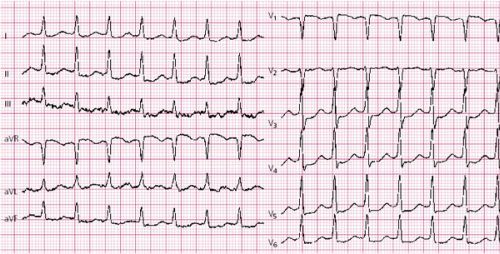
- Aamiodarone 300mg IV push.
- Badenosine 12-mg IV push.
- CValsalva maneuver.
- Dverapamil 3-mg IV push.
- Eadenosine 6-mg intravenous (IV) push.
Reveal the correct answerWhich of the following does not constitute the basic changes in ERC 2010
recommendations:
- Adelivery of drugs via a tracheal tube is no longer recommended – if intravenous access cannot be achieved, drugs should be given by the intraosseous (IO) route.
- Bwhen treating VF/VT cardiac arrest, adrenaline 1mg is given after the third shock once chest compressions have restarted and then every 3–5 min (during alternate cycles of CPR). Amiodarone 300mg is also given after the third shock.
- Catropine is not recommended for routine use in asystole or pulseless electrical activity.
- Dafter cardiac arrest, blood glucose values >180mg/dL should be treated but hypoglycaemia must be avoided.
- Erole of the precordial thump is emphasised.
Reveal the correct answerA 65-year-old patient has been admitted to the ED because of malaise,
fainting and cardiac arrhythmia. He has suffered from diarrhea for 5 days, it did occur
in his family members. He has no cardiovascular risk factors. On physical examination:
RR 75/50, irregular pulse on the radial artery. His diagnostic test are as follows: ECG –
recurring episodes of ventricular tachycardia with premature ventricular and atrial
beats; blood electrolytes: Na 130 mEq/l, K 2.0 mEq/l, Cl 99 mEq/l, Ca 8.9 mg/dl, Mg
0.8 mmol/l. Which of the following is the optimal treatment:
- Aiv fluids infusion, furosemide 1 mg/kg iv, hydrocortisone 200–300 mg iv.
- Biv fluids infusion, KCl iv in the dose of 2 mmol/min for 10 minutes, then 10 mmol within 5–10 minutes.
- Civ fluids infusion, CaCl2 10%,10–40 ml, MgSO4 50% 4–8 mmol (if necessary) and 60 mmol/h KCl.
- Div fluids infusion, 2g 50% MgSO4 (4 ml = 8 mmol) iv within 15 minutes, and then potassium gluconate 270 mg orally.
- Eiv fluids infusion ,CaCl2 10%, 5–10 ml, repeated if necessary and mechanical ventilation if needed.
Reveal the correct answerIn resuscitation of children with shockable rhythms the recommended
strategy of defibrillation is:
- Asingle shocks using non-escalating dose of 2J/kg.
- Bsingle shocks using non-escalating dose of 4J/kg.
- Ctriple shocks using non-escalating dose of 4J/kg.
- Dsingle shocks using escalating dose of 4J/kg.
- Esingle shocks using total dose not exceeding 40 J/kg.
Reveal the correct answerIt is not true that in the treatment of acute coronary syndrome:
- Anon-steroidal anti-inflammatory drugs (NSAIDs) should be avoided.
- Bnitrates should not be used for diagnostics purposes.
- C‘rescue PCI’ should be routinely undertaken also after successful fibrinolysis.
- Dsupplementary oxygen is to be given only to patients with hypoxaemia, breathlessness or pulmonary congestion.
- Eacetyl salicylic acid (ASA) may now be given by bystanders even without EMS dispatcher assistance.
Reveal the correct answerThe classic Beck’s triad is a collection of three signs associated with cardiac
tamponade, which are:
- Abradycardia, muffled heart sounds, jugular venous distention.
- Bbradycardia, loud heart sounds, jugular venous distention.
- Chypotension, muffled heart sounds, collapsed jugular veins.
- Dhypotension, muffled heart sounds, jugular venous distention.
- Ehypotension, loud heart sounds, jugular venous distention.
Reveal the correct answerA physician is allowed to disclose all information about his patient and
patient’s environment that he has acquired in the course of his professional activities:
- Aalways when the physician considers it to be the right thing to do.
- Bto any other physician.
- Cto any person assisting the physician at work or helping him at his professional activities.
- Dafter obtaining patient’s consent.
- Ealways after patient’s death.
Reveal the correct answerHitting the person who is a physician’s patient by this physician:
- Ais allowed always when patient has earlier hit or insulted the physician or a nurse.
- Bis not allowed, because hitting a patient by a member of medical staff does not belong to the catalog of the means for restraining patients physically, cases of which are allowed by the law, under strict constraints.
- Cis always allowed when the physician considers it to be the right thing to do.
- Dis always allowed when the patient is underage or the patient’s rights to decide about himself have been limited as a result of proper law procedure.
- Eis allowed when the patient has been earlier diagnosed with mental disturbances.
Reveal the correct answerApplying direct physical restrains towards a patient by a physician not only by
the means of holding them down or compulsory drug administration but, if needed,
also by immobilizing or by isolating them:
- Ais allowed only in the case of mentally disturbed patient who endangers hisor other people’s life or health, endangers public safety or his violent behaviour destroys or damages objects surrounding him.
- Bis not allowed in any case, because it constitutes a violation of patients rights, to which the patient is entitled as a human being and citizen. These rights are guaranteed by the Polish Constitution.
- Cis allowed in the case of any patient under any circumstances, when the physician considers it personally the right thing to do.
- Dis allowed in the case of mentally disturbed patient who by his behaviour seriously interferes with the functioning of the health care unit or prevents it from functioning.
- Eis allowed in the case of any patient under any circumstances, if the patient has been diagnosed with mental disturbances.
Reveal the correct answerA physician, willing to use a conscience objection clause, has to:
1) obtain the consent from his superior;
2) inform the Patient Ombudsman;
3) indicate a real possibility of obtaining the service from another physician;
4) report and explain this fact in the medical record;
5) apply for authorization to a competent court.
The correct answer is:
- A1,2.
- B1,3.
- C3,4.
- Donly 5.
- E4,5.
Reveal the correct answerRegional commissions deciding on medical events deal with matters relating
to medical events concerning health care services provided exclusively:
- Aby dental practitioners.
- Bin hospitals.
- Cby physicians in individual practices.
- Dby physicians in group medical practices.
- Eby non-physician health care professionals.
Reveal the correct answerThe act on therapeutic activities provides a possibility to introduce the so
called opt-out clause. This construction allows for the following:
- Ait is possible to employ pregnant women for night shifts.
- Bworking time accounting period is extended up to 12 months.
- Cstandard day working time may be increased up to 14 hours.
- Demployer is excused from the obligation to grant the employee a leave for the maximum period of 3 years.
- Eemployee may work in excess of an average of 48 hours per week in the accounting period.
Reveal the correct answerIn the case of patient's death which occurred in a hospital, death certificate is
made:
1) by the physician treating the patient;
2) only by the head of the department;
3) by the physician on duty;
4) by the physician authorized by the hospital manager;
5) only by a forensic medical specialist.
The correct answers is:
- A1,2.
- B1,3.
- C2,4.
- D2,3.
- Eonly 5.
Reveal the correct answerDoes the Polish Code of Medical Ethics contain a provision on euthanasia?
- Athere is no such provision.
- Bthe Code recommends physicians exercising euthanasia.
- Cthe Code prohibits physicians from exercising euthanasia.
- Dthe Code leaves decision to physicians.
- Ethe Code leaves decision to patients.
Reveal the correct answerDoes the Polish Code of Medical Ethics contain a provision on causing
heritable genetic changes in humans?
- Athe Code does not deal with genetics.
- Bonly an indirect one.
- Cthe Code refers here to the law.
- Dit prohibits inducing heritable genetic changes in humans.
- Eit recommends inducing positive heritable genetic changes in humans.
Reveal the correct answerThe Act of Law of 25 June 1999 on financial benefits paid out from social
insurance in the case of sickness and maternity specifies the conditions and amounts
of the financial benefits for insured persons. Which of the following is not paid out from
the sickness fund?
- Asickness benefit.
- Brehabilitation benefit.
- Ctraining pension.
- Dcompensatory benefit.
- Ecare allowance.
Reveal the correct answerThe basic beneficial period in social insurance for farmers is 180 days. If the
insured person is still unable to work after that time but owing to further treatment and
rehabilitation may regain full working capacity then the beneficial period is prolonged
up to the predicted time of such recovery. However, the prolonged period
cannot exceed:
- A90 days.
- B120 days.
- C180 days.
- D250 days.
- E360 days.
Reveal the correct answerIn accordance with the Law on cash benefits from social insurance in the
case of disease and maternity, medical rulings on temporary incapacity to work for the
period earlier than 3 days prior to the medical examination day of the insured person
can be issued by:
- Amedical unit manager.
- Bhospital administrator.
- Cpsychiatrist.
- DSIF (ZUS) certifying doctor.
- EASIF (KRUS) certifying doctor.
Reveal the correct answerSIF (ZUS) certifying doctors and medical boards issue rulings determining the
entitlements to benefits from Social Insurance Fund. They do not issue rulings on:
- Awork incapacity for pension purposes.
- Bneed for rehabilitation as a form of pension prevention.
- Cpermanent or long-lasting damage to health due to accident at work or occupational disease.
- Ddegree of disability.
- Ereference between incapacity to work and accident at work or occupational disease.
Reveal the correct answerDisability pension due to incapacity to work is paid to the insured person from
the Pension Fund. In order to be entitled to this pension, the insured person must have
the required contributory and noncontributory period and hold a medical ruling on:
- Aincapacity to work which occurred during the period of insurance or not later than 18 months from the date of the termination of employment.
- Bmoderate degree of disability.
- Cincapacity to work which occurred during the period of insurance or not later than 24 months from the date of the termination of employment.
- Dincapacity to work which occurred during the period of insurance or not later than 36 months from the date of the termination of employment.
- Econsiderable degree of disability.
Reveal the correct answerOccupational diseases are those which are indicated on the list of occupational diseases (the Cabinet of Ministers Regulation dated 30 June 2009) and which
occurred because of work environment agents harmful to health or as a result of the
ways of working. The aforementioned list does not include:
- Apneumoconiosis.
- Bbronchial asthma.
- Callergic rhinitis.
- Dmyocardial infarction.
- Evibration syndrome.
Reveal the correct answerIn accordance with the Law on cash benefits from social insurance in the
case of disease and maternity, the insured person is entitled to the sickness benefit
from the first day of their sickness insurance if the temporary incapacity to work:
- Ais caused by tuberculosis.
- Bis a consequence of alcohol abuse.
- Cwas a consequence of an accident on the way to or from work.
- Dtakes place during pregnancy.
- Ewas a result of going through necessary medical examinations stipulated for cell, tissue and organ donors as well as through the procurement of those entities.
Reveal the correct answerThe following infectious diseases require obligatory hospitalization:
- Aplague.
- Bdiphtheria.
- Csmallpox.
- Dcholera.
- Eall the above.
Reveal the correct answerScreening is performed in:
- Asick people, i.e. with symptoms of specific disease.
- Bhealthy people, without clinical symptoms, testing for specific disease.
- Conly people with insurance, at high risk of a specific disease.
- Deverybody who potentially may become ill.
- EB and D are true.
Reveal the correct answerLife expectancy at birth – is one of the key public health indicators reflecting:
- Aliving conditions.
- Bhealth of the population.
- Cenvironment quality.
- Dquality of medical care.
- Eall the above.
Reveal the correct answerThe main goal of the National Health Program for 2007-2015 entitled “The
improvement in the health of the population and health-related quality of life and the
reduction of inequalities in healthcare” – is realized through:
- Adevelopment of pro-health lifestyle.
- Bcreating health-promoting life and learning environment.
- Ccreating health-promoting work environment.
- Dactivation of local administration and NGOs to work for health.
- Eall the above.
Reveal the correct answerAccording to WHO risk factors for chronic disease are:
- Adiet with low fruit and vegetable content.
- Blow physical activity.
- Ctobacco, alcohol, overweight.
- Delevated cholesterol.
- Eall the above.
Reveal the correct answerWhich of the following United Nations documents refers to the human right to
healthcare? It has been stated there that “Everyone has the right to a standard of living
adequate for the health and well-being of himself and of his family, including food,
clothing, housing and medical care and necessary social services, and the right to
security in the event of unemployment, sickness, disability, widowhood, old age or
other lack of livelihood in circumstances beyond his control.”
- AUnited Nations Charter.
- BInternational Covenant on Economic, Social and Cultural Rights.
- CUniversal Declaration of Human Rights.
- DInternational Convention on The Rights of Children and Women.
- EConvention on Human Rights and Biomedicine.
Reveal the correct answerWhich legal act currently in force in the Republic of Poland includes the
following entries?
1) everyone has the right to healthcare;
2) public authorities provide citizens, irrespective of their financial situation, with
equal access to healthcare services financed from public funds. The
conditions and scope of healthcare are specified in the Act;
3) public authorities are obliged to ensure special healthcare to children,
pregnant women, disabled and elderly people;
4) public authorities are obliged to combat epidemic illnesses and prevent
negative health consequences of environmental degradation;
5) public authorities are obliged to support the development of physical care,
especially among children and adolescents.
- AThe Constitution of the Republic of Poland of April 2nd 1997, Article 68.
- BAct of August 27th, 2004 on the financing of health services, Article 3.
- CAct of February 6th, 1997 on general health insurance, Article 2.
- DAct of December 5th, 2008 on prevention and control of infections and infectious diseases in humans, Article 1.
- EAct of October 13th 1998 on health insurance system.
Reveal the correct answerMorbidity is defined as follows:
- Aall the existing diseases in a defined population at a given time.
- Bselected groups of diseases in selected populations.
- Cnew cases of the disease that occurred within the specified period of time.
- Dnumber of infectious diseases occurring in a given territory at a given time.
- Ea rate of the number of new cases of disease that occurred during a given period of time to the number of people exposed to the disease at this time.
Reveal the correct answerSudden increase in creatinine concentration with hyperuricemia (>890 umol/L. >15 mg/dl) and hyperkalemia may indicate:
- Aacute urate nephropathy.
- Btumor lysis syndrome.
- Cprerenal acute renal failure.
- Dall the above.
- EA and B are correct.
Reveal the correct answerThe indication for the introduction of other meals (except milk) from 6 months
of life is not:
- Anecessity of 8-10 feedings a day.
- Binfant drinking approx. 1L of milk mix a day.
- Cwhen infant doubles its birth weight.
- Dwhen monthly weight gain decreases below 500 g.
- Econtinuation of breast feeding and the introduction of 2-3 g of porridge containing gluten in 6 month of life.
Reveal the correct answerGestational diabetes is diagnosed when blood glucose 2 hours after the
administration of 75 g glucose solution is at least:
- A7.5 mmol/l.
- B6 mmol/l.
- C7 mmol/l.
- D7.8 mmol/l.
- E8.5 mmol/l.
Reveal the correct answerAccording to the Polish Mental Health Act (art 23) the mandatory admission
to psychiatric hospital is allowed when the person:
- Ahas mental disorder.
- Bposes danger to others’ health.
- Cis of minor age.
- Dsuffers from mental disease.
- Eposes danger to the legal order.
Reveal the correct answerA 26-year-old patient suffered from a low abdominal injury (run over by a
tractor). Unstable pelvic fracture complicated with massive bleeding and a rectum
injury were diagnosed. The primary surgical procedure is:
- Afixation of the pelvic fractures with a blocked plate.
- Bplacement of an external pelvis fixator.
- Claparotomy to stop the bleeding and peritoneal drainage.
- Dlaparotomy: pelvic packing.
- Eexteriorization of the rectum.
Reveal the correct answerPharmacological treatment of moderate COPD includes:
- Aregular administration of short-acting anticholinergics 3-4 times per day.
- Bregular administration of long-acting inhaled bronchodilators.
- Cregular administration of selective phosphodiesterase 4 inhibitors.
- Dregular administration of inhaled low-dose GKS.
- Eemergency administration of selective short-acting β2-mimetics.
Reveal the correct answerThe reversible causes of cardiac arrest do not include:
- Ahypocalcemia
- Bhypovolemia.
- Ctamponade
- Dpneumothorax
- Ehypoxia
Reveal the correct answerDuring a surgery on an adult and competent patient under general anesthesia
a necessity arose to broaden the operating field, to which the patient did not express
his consent (or objection) before the operation. The operation is permitted only if:
1) the surgeon is authorized by the patient's legal representative;
2) a close person to the patient gives the consent;
3) not taking into account this new circumstance would put the patient’s life at risk or cause severe personal injury or severe health disorder;
4) the surgeon, if possible, obtains an opinion of another doctor, possibly of the same specialty;
5) direct threat to the life of the patient occurs.
The correct answers is:
- A1,2.
- B3,4.
- C2,4.
- D4,5.
- E1,5.
Reveal the correct answer